
Digimon Story: Time Stranger took me a bit by surprise. I first tried the still-available demo, which didn’t exactly blow me away, but it definitely sparked my curiosity to see how the rest of the game unfolds. Well, things only got better from there, and I’m still impressed by how many clever ideas and interesting mechanics the developers managed to pack in. This isn’t another set of Pokémon made in a hurry — it’s a fully-fledged JRPG with plenty of unique features. I absolutely love surprises like this!

The story of Digimon Story: Time Stranger has its moments and knows how to surprise
The plot of Digimon Story: Time Stranger isn’t overly ambitious, but it’s a well-crafted mix of classic motifs with an intriguing time-travel twist that adds great momentum to the narrative. The adventure begins with choosing the protagonist’s gender, and we step into the shoes of an agent of the ADAMAS organization, whose mission is to investigate anomalies appearing across Tokyo. We witness a series of strange phenomena that bring Digimon into the real world, causing chaos both in the city and in the lives of its residents.
The first explosion, triggered by one such anomaly, takes us eight years into the past, intertwining two timelines — the present and the past. From that moment, things become increasingly engaging and somewhat chaotic, as we move between the real world and the digital realm of Iliad. The grounded segments are relatively subdued, while the game truly shines in its virtual environments. The locations are well-designed and thematically diverse: you’ll visit sacred-like places, polluted areas, icy and volcanic regions — each featuring unique Digimon and environmental challenges.
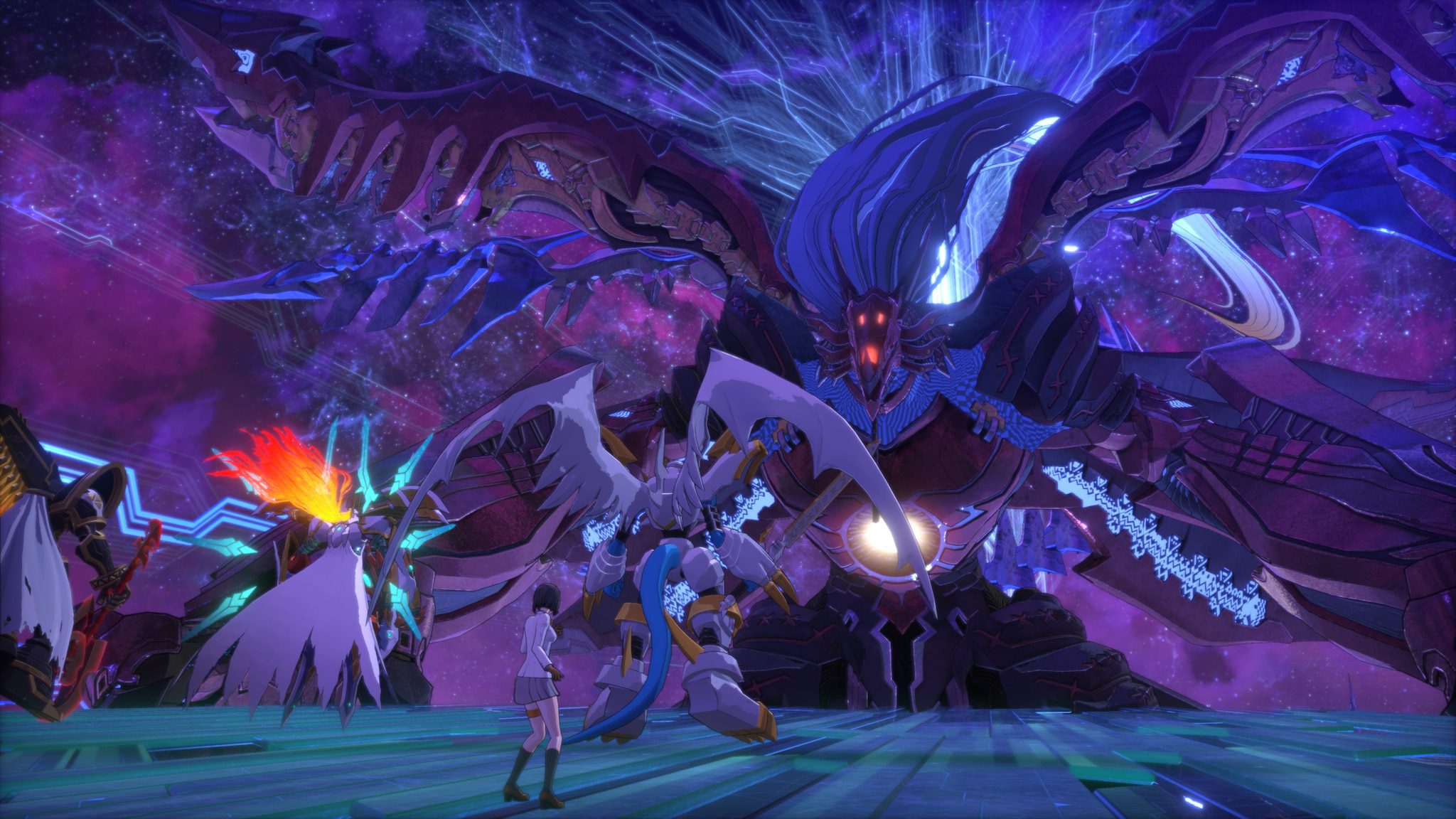
During the journey, we meet Inori, a mysterious girl who hunts Digimon in the real world. Her motives and connections to Iliad gradually unfold as the story progresses, adding a pleasant sense of tension and lending the narrative a more mature — and at times even darker — tone. The storytelling balances heavier themes, such as disasters caused by anomalies, moral dilemmas tied to time travel, and battles against the so-called “Titans,” with the lighthearted charm typical of the Digimon series, full of humorous interactions.
The difference in storytelling compared to the Pokémon series is striking — in favor of this title, which in that regard feels much closer to Atlus productions. The tone and narrative depth are far superior, offering a genuinely engaging story that kept me interested throughout. Admittedly, the human characters can be a bit formulaic — like the somewhat annoying ADAMAS operator who constantly contacts us — but they still serve as a solid backdrop for the events.
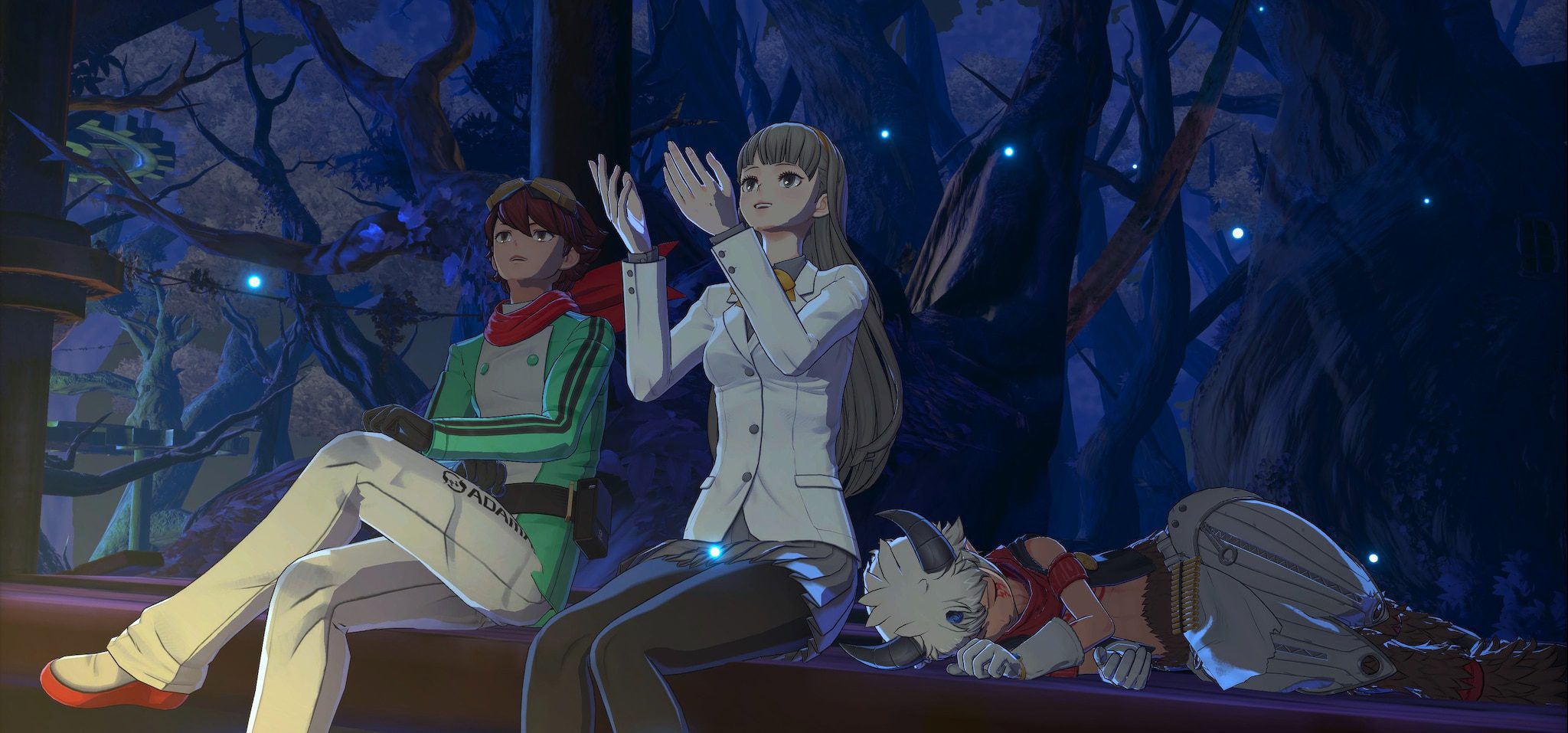
The titular Digimon naturally play a crucial role here, and they’re not just tools for combat. You build bonds with them — through conversations, feeding, or observing changes in their personalities. The atmosphere in Time Stranger shifts depending on location and situation: the real world feels tense and grounded, reflecting the consequences of the anomalies, while Iliad exudes a sense of adventure and mystery.
It’s linear — but is that a bad thing?
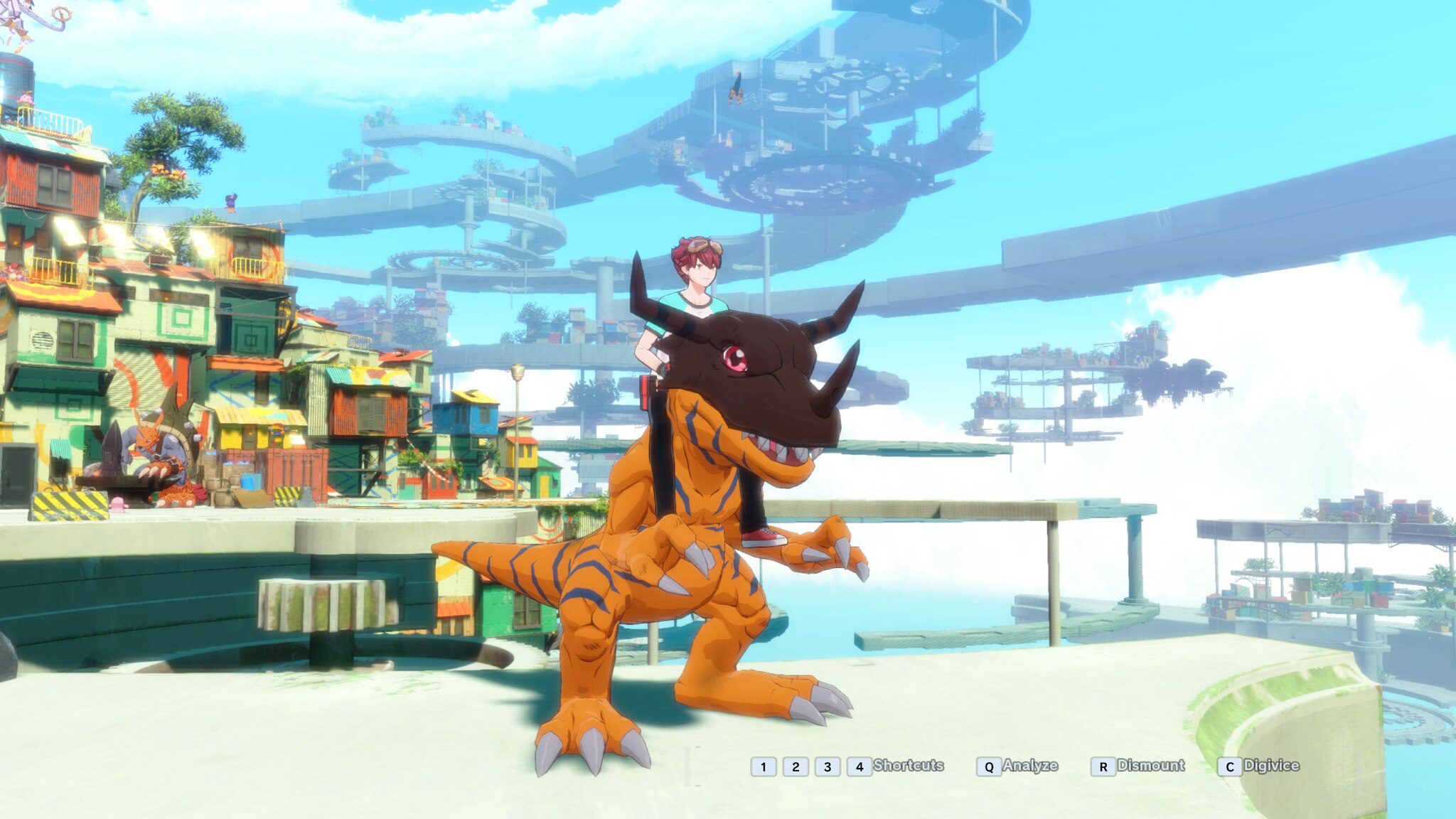
The gameplay itself is a hybrid of the best ideas the JRPG genre is known for. Exploration in the real world is very linear and mostly revolves around following clues, talking to NPCs, and investigating areas for anomalies. In Iliad, however, exploration often takes you through labyrinthine zones filled with lurking Digimon. Encounters are not random — the game uses them as a tactical element, allowing you to strike first or eliminate weaker foes before the fight even begins.
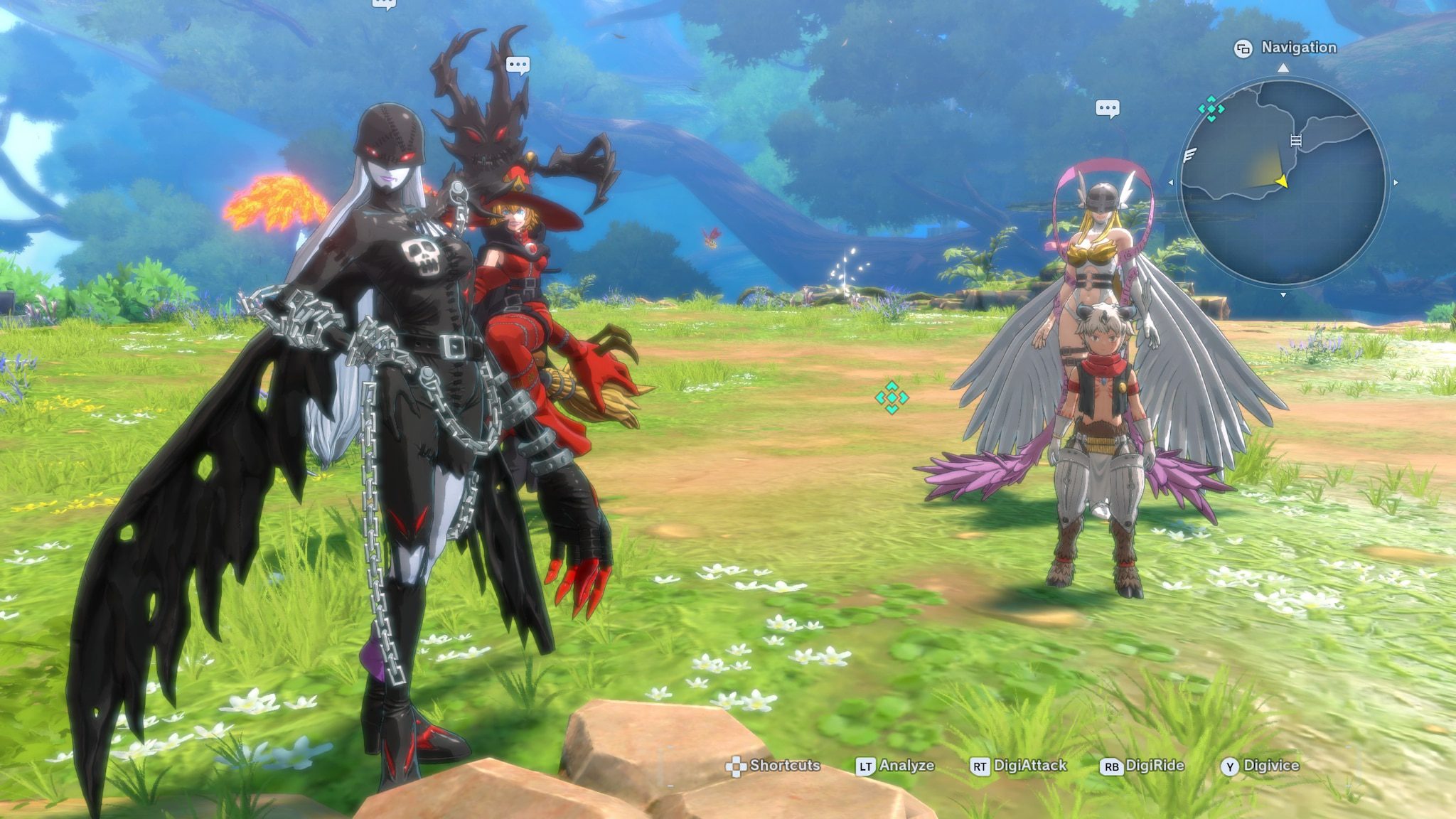
While the main story revolves around saving the world from an impending cataclysm, Time Stranger constantly encourages players to step off the beaten path. Side quests follow the classic formula — fetch items, help a lost Digimon, defeat a specific enemy group — but they make up for their simplicity with interesting cutscenes and rewarding bonuses. They’re also a great excuse to discover new Digimon species, their habits, and personalities, adding a lot of depth to the world. Some missions grant Anomaly Points, crucial for character progression, as they unlock new abilities or increase your Agent rank — which in turn grants access to stronger Digimon forms. This way, even minor quests feel meaningful and naturally fit into the game’s progression loop.
An integral part of exploration is the Digifarm — a kind of training hub where you can boost stats, tweak personalities, and strengthen bonds with your Digimon. It also serves as a team management tool, allowing you to assign Digimon to real-time training sessions. Between battles and exploration, you can even try your hand at a card minigame, apparently based on the real Digimon Card Game — though I admit card games aren’t really my thing.
Combat feels like a mix of Pokémon and Shin Megami Tensei
Fights take place in a classic turn-based format, but their rhythm and complexity resemble Shin Megami Tensei more than traditional Pokémon battles. You can have up to three active Digimon on the field and three in reserve, and sometimes an AI-controlled guest ally will join your team. In practice, even simple encounters can surprise you with their tactical depth — constant type-switching and smart use of special skills are essential to victory.
The attribute and element mechanics are the foundation of the game’s strategic depth. Every Digimon belongs to one of three core types — Data, Vaccine, or Virus — in a rock-paper-scissors relationship. Each Digimon also has an elemental affinity, such as Fire, Water, or Earth, which can greatly amplify damage when exploited correctly. Combining these layers makes battles far from random — they require planning, experimenting with skill combinations, and predicting enemy moves. There’s also the Cross Arts system — powerful special moves unlocked when the CP gauge fills up. These high-impact techniques can devastate enemies or heal the entire team. Using them at the right time can easily turn the tide of battle.
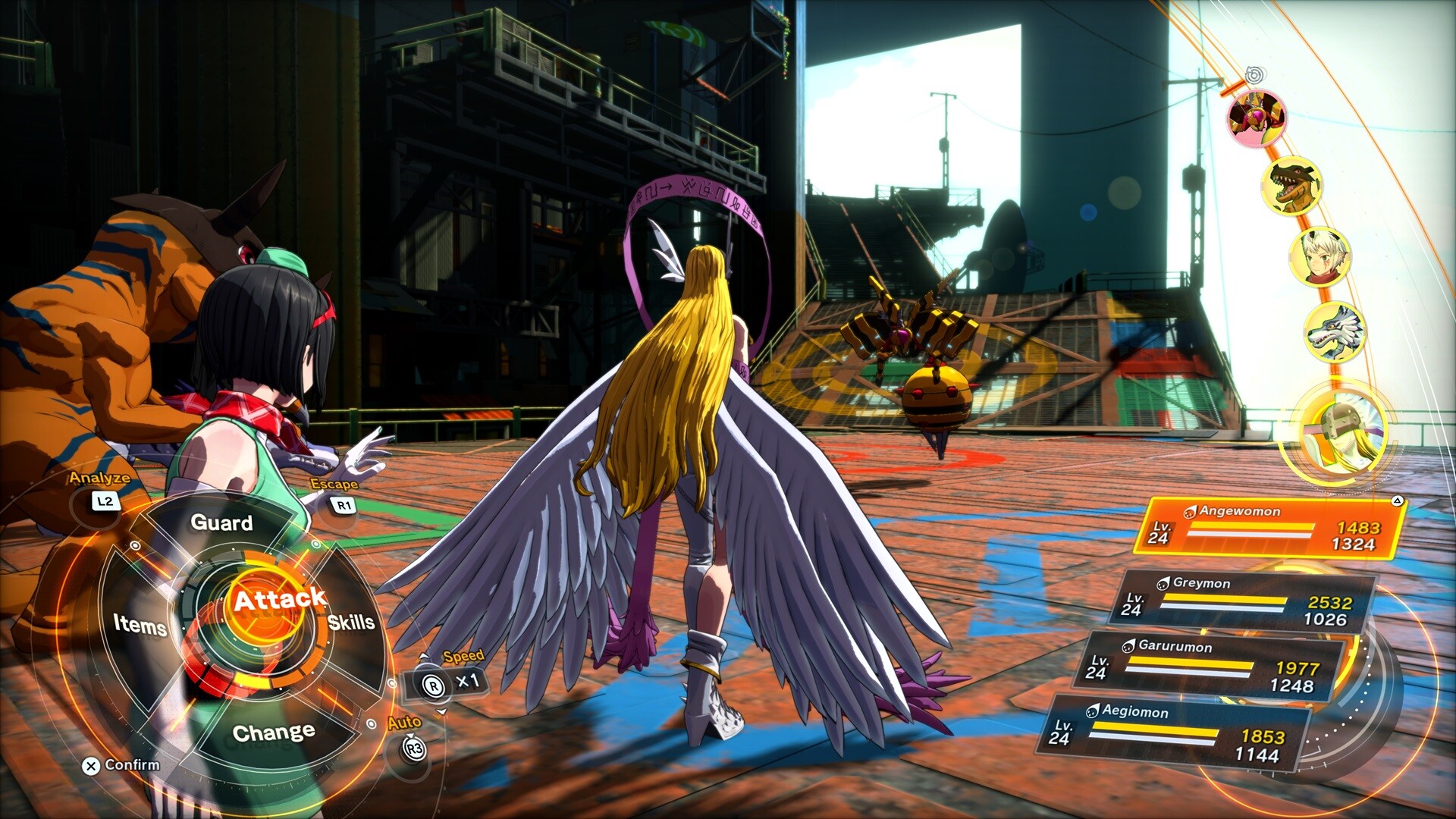
The true heart of progression, however, lies in Digivolution — the evolution and de-evolution process that offers immense flexibility. Each Digimon has a branching development tree, and you have full control over which evolutionary path to pursue. Some forms require specific Agent levels or stat thresholds, encouraging constant training and experimentation.
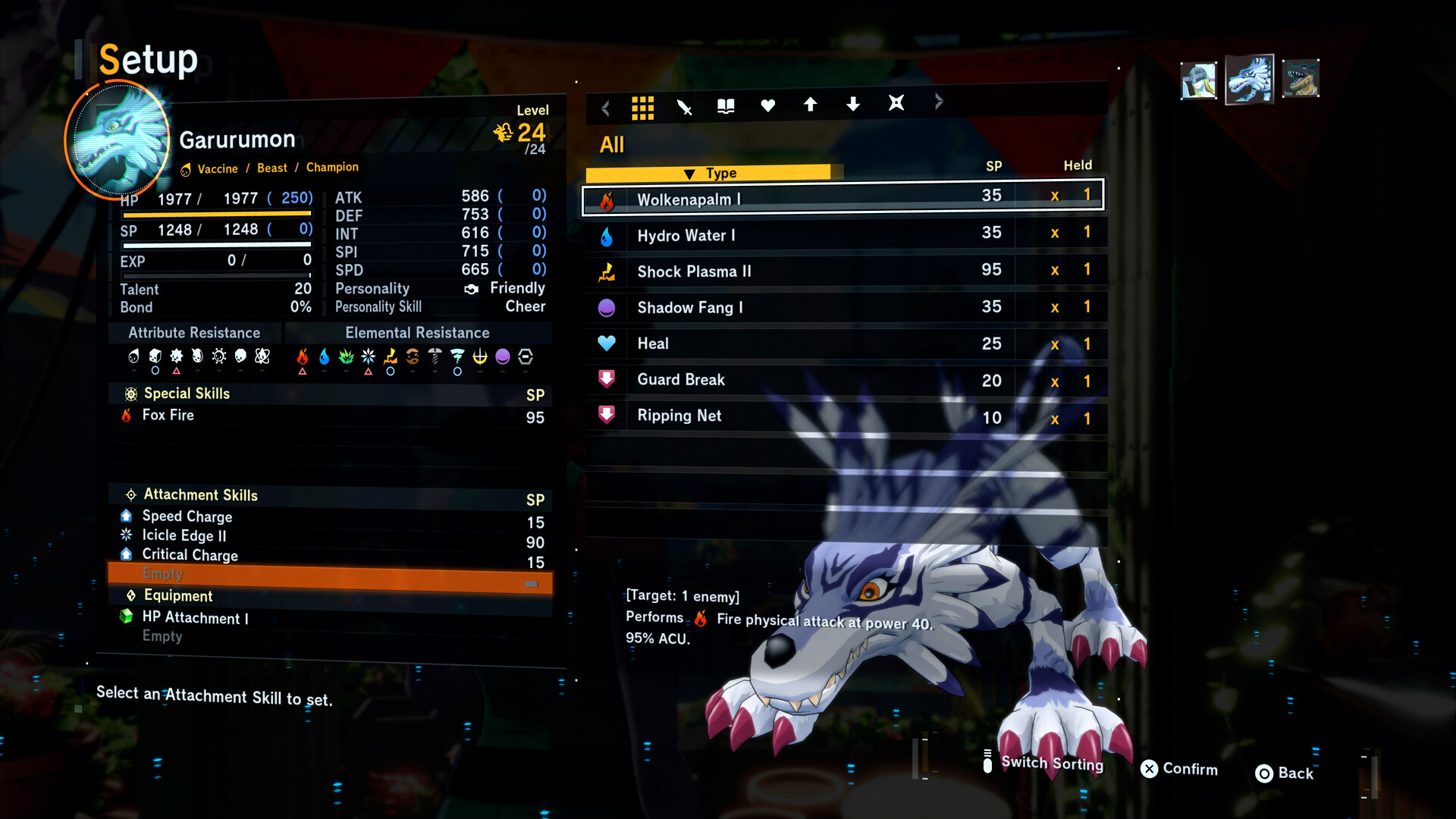
Importantly, stats from previous forms are carried over, making frequent Digivolving and De-Digivolving less of a chore and more of a long-term investment. Then there are Skill Discs — the equivalent of TMs from Pokémon — allowing Digimon to learn new special abilities. Combined with the Personality system, which affects stat growth rates, this results in a remarkably deep and flexible development structure that rewards experimentation.
All of this comes together to form one of the most comprehensive and flexible progression systems I’ve ever encountered in a JRPG. Despite its depth, Digimon Story: Time Stranger remains easy to grasp and never overwhelms the player with excessive stats or difficulty. I finished the story at a relaxed pace in about 30 hours — a perfectly satisfying experience, with no trace of monotony. If you plan to complete every side quest and explore every nook and cranny, you can easily double that time.
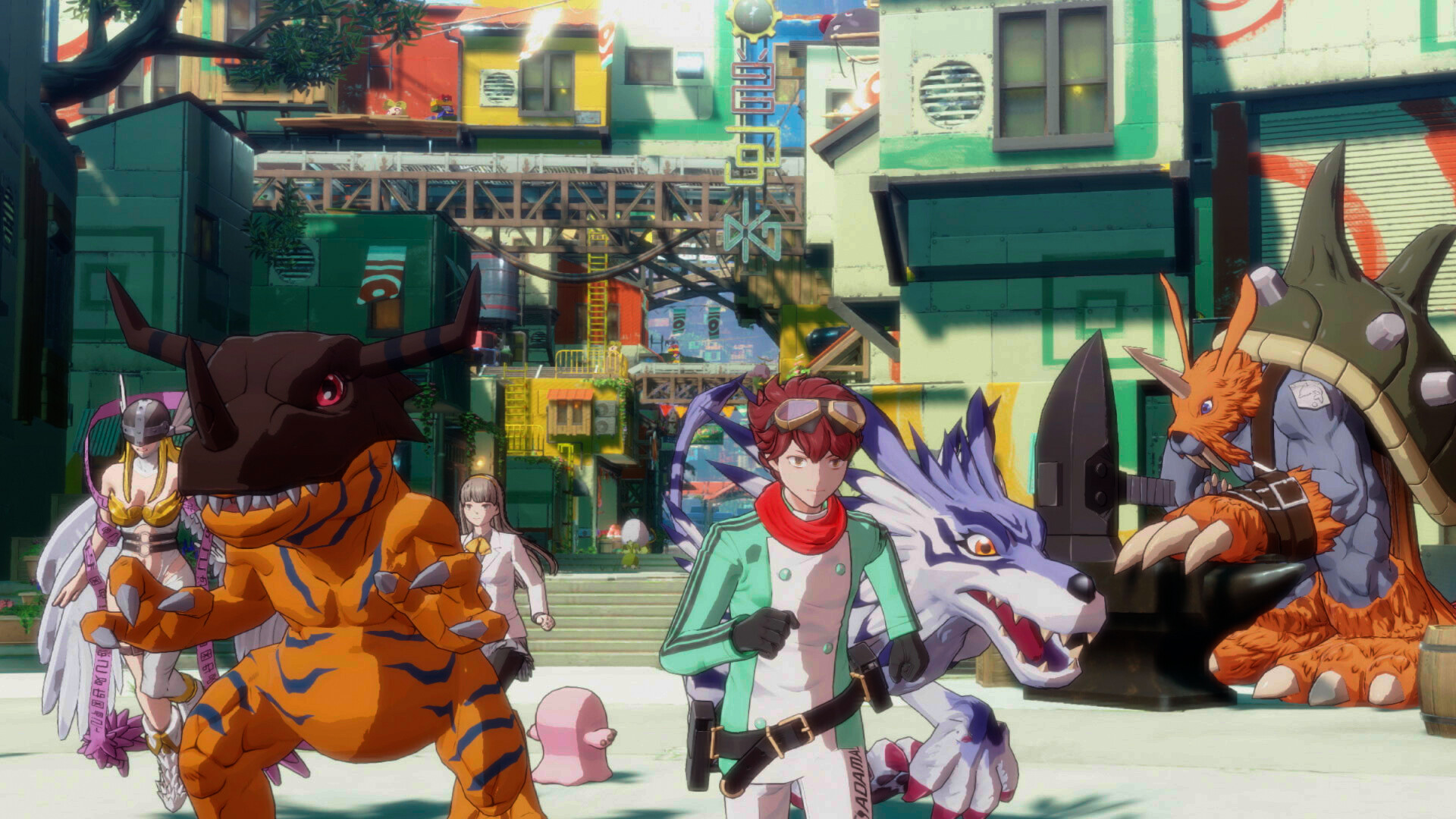
Visually simple — yet aesthetically pleasing
Visually, Digimon Story: Time Stranger doesn’t dazzle, but it has a distinct, slightly cartoonish style wrapped in modern rendering technology. The graphics engine handles both dynamic battles and large-scale exploration quite well, though I did wish for a bit more detail. Textures are solid, and the lighting and particle effects — especially during powerful attacks — look impressive. Each of the 450+ Digimon has unique attack animations, poses, and gestures, making even basic encounters enjoyable to watch. The sound design also deserves praise, fitting the mood perfectly and enhancing the game’s atmosphere. Voice acting is solid too, especially for the Digimon, whose distinctive voices give them personality. Unfortunately, it’s somewhat limited — many lines (including all of the protagonist’s) are unvoiced — but it’s still a welcome improvement over Pokémon titles.
A few words on optimization: Digimon Story: Time Stranger isn’t demanding and runs smoothly even on the Steam Deck, maintaining stable 30FPS in crowded areas. More powerful hardware can obviously push things further, but it’s a shame that the engine caps performance at 60FPS. It’s also worth noting that the game lacks resolution-scaling options, which could’ve helped improve performance without sacrificing image quality.
To wrap up — a bit of controversy
Unfortunately, one of the most discussed aspects of Time Stranger’s release is its sales model. The standard edition is priced at 69.99 USD, with Deluxe and Ultimate editions costing 99.99 USD and … 119.99 USD respectively. And yes, even the most expensive version doesn’t include everything. The pricier editions mainly offer cosmetic skins, alternative soundtracks, boosters, extra quests and dungeons, and a bundle of future DLC. Such product fragmentation serves no one — it’s clear that a lot of content was intentionally cut out to be sold separately.
Final thoughts
I had no prior experience with the Digimon franchise — neither the anime nor previous game entries. Time Stranger completely caught me off guard and, after a slow start, hooked me for dozens of hours with its deep and engaging gameplay. While the overpriced editions and DLC policy can dampen enthusiasm, the game itself is absolutely worth recommending. It’s a refreshing breath of air in a genre long dominated by Pokémon, and honestly, it’s far more interesting than the recently released Legends Z-A.
Digimon Story: Time Stranger: delivers a surprisingly deep and well-balanced JRPG adventure packed with smart ideas and emotional storytelling. Despite its DLC politics, it easily earns an 8+ out of 10 for its creativity and charm. – Great on Deck